

Here at Minnesota Family Chiropractic, we are committed to providing best-in-class patient care and treatment for patients suffering from neuropathy and other related issues. Our compassionate, experienced team of chiropractors specialize in treating nerve pain through an all-natural therapeutic approach.
Also known as peripheral neuropathy, neuropathy is a medical condition resulting from damaged or destroyed nerve cells that can cause numbness, weakness, and tingling or burning pain. Neuropathy affects the nerves of the peripheral nervous system and can be inherited or acquired through medical conditions such as diabetes, chemotherapy, kidney failure, or autoimmune diseases. When neuropathy is a side effect or caused by other medical conditions, treatment is tailored first to treat the underlying condition which then reduces the severity of the nerve pain.
The symptoms and type of neuropathy you may be suffering from largely depend on the types of nerves that are damaged. These include damaged motor nerves, sensory nerves, or autonomic nerves. With this in mind, it’s important to document what type of symptoms you may be experiencing prior to your visit to our office so we can better diagnose and treat your pain. To effectively treat the various underlying causes of neuropathy, we utilize a combination of natural therapeutic treatments such as acupuncture, corrective care, and nerve regeneration to reduce the severity of your discomfort.
We understand how unpleasant neuropathic pain is which is why we are proud to provide a comfortable, family-friendly office atmosphere for our patients. Our helpful, professional staff are here to help you manage your pain and help treat any underlying conditions.

Neuropathy can affect both the central nervous system and the peripheral nerves in our body, though the peripheral nerves are much more commonly affected. While there is not a cure for neuropathy, there have been new developments in the treatment of nerves and nerve regeneration. The peripheral nerves have the unique ability to go through restoration if the underlying problems have been addressed. Standard medical treatments for neuropathy are built solely to manage pain. With chiropractic care, you can develop a plan to correct the underlying causes of your neuropathy, and in time, begin to regenerate your peripheral nerves.
Neuropathy gradually progressives over time. In the beginning, some patients report feeling numbness or tingling in the fingers or toes. When left untreated, the numbness begins to spread around the body and evolves into prickling pain. As the neuropathy spreads, patients begin to have issues maintaining their balance. Frequent falls do start to occur during normal daily activities for some neuropathy patients. This is when patients typically turn to chiropractic care over traditional medical treatments.
While conventional medicine serves to reduce pain, there is no plan for long-term healing or treatment of the disease. The number of neuropathy patients who are undergoing corrective chiropractic care has been growing exponentially. This is because more people are seeking alternative treatments to treat the underlying cause of their neuropathy without the risk of potential side effects from taking prescription medication.
With the proper chiropractic care, nutrition, and homeostasis in the body, our nerves are able to regenerate and heal themselves. This regeneration process may be the only way that neuropathy patients can support their overall nerve health and quality of life, along with finding significant relief from their pain. Through chiropractic care, the goal is to release all of the tension in the body and to correct the underlying causes of your neuropathy so that the healthier the body is, the more likely the body will naturally facilitate the nerve regeneration process.
For more information on nerve regeneration, or to schedule an appointment please, don’t hesitate to contact us at (612) 545-5672.
At Minnesota Family Chiropractic, Dr. Kim Tran and Dr. Brian Betts believe the body was created with an incredible ability to heal, adapt, and recover when the nervous system is functioning at its best and the body receives proper support.
Scientific research continues to explore the regenerative potential of peripheral nerves under certain conditions. While every patient’s healing experience is unique — depending on the severity, duration, and cause of nerve damage — published studies suggest that peripheral nerves may regenerate slowly over time.
According to the NIH research review Peripheral Nerve Healing: So Near and Yet So Far (2021):
“Axons regenerate at a relatively constant rate of approximately 1 mm per day under certain conditions.”
Similarly, the NIH review article Peripheral Nerve Reconstruction after Injury (2014) states:
“Peripheral nerve axons may regenerate at an average rate of approximately 1 mm/day in humans.”
Additional research published through the American Academy of Physical Medicine and Rehabilitation (AAPMR) notes:
“Axonal regeneration occurs slowly and varies depending on the severity and cause of nerve injury.”
These findings reinforce the importance of supporting overall nerve health, circulation, movement, posture, and cellular function throughout the healing process.
At Minnesota Family Chiropractic, our goal is to help create an environment that supports the body’s natural healing mechanisms through a comprehensive, whole-body approach.
Treatment plans may include:
Rather than simply masking symptoms, our focus is on improving nervous system function, mobility, circulation, and overall quality of life naturally.
When a peripheral nerve becomes injured, the disconnected portion of the nerve undergoes a natural cleanup process called Wallerian degeneration. During this phase, the body removes damaged tissue and cellular debris to help prepare the area for potential healing and regeneration.
Research suggests this process is an important early step in creating an environment that may support future nerve repair.
Schwann cells are specialized support cells that help protect and insulate peripheral nerves. Following nerve injury, research indicates these cells may become highly active and assist the healing process by:
These cellular responses are believed to play a significant role in peripheral nerve regeneration and recovery.
Scientific literature suggests that injured nerve cells may attempt to regenerate by extending new axonal sprouts toward surrounding tissues.
This process may help restore communication pathways between nerves, muscles, skin, and other tissues. However, regeneration speed and outcomes can vary greatly depending on factors such as the severity of injury, duration of nerve dysfunction, circulation, inflammation, and overall health.
Research reviews commonly report that peripheral nerve regeneration occurs slowly over time. Multiple published studies suggest axonal regeneration may occur at an average rate of approximately 1 millimeter per day under supportive conditions, although healing timelines vary significantly from person to person.
The AAPMR review on peripheral neurological recovery further emphasizes that:
“Axonal regeneration occurs slowly and varies depending on the severity and cause of nerve injury.”
As regenerating nerve fibers mature, Schwann cells may help form new myelin sheaths around the nerves.
Myelin acts as an insulating layer that helps improve nerve signal transmission and communication throughout the body. Research suggests remyelination may play an important role in restoring nerve efficiency and supporting functional recovery.
The nervous system controls every organ, muscle, movement, and sensation in the body. Chronic stress, spinal dysfunction, inflammation, poor circulation, repetitive strain, injuries, metabolic stress, and lifestyle factors may all influence how efficiently nerves function.
At Minnesota Family Chiropractic, we focus on helping improve:
By supporting the body as a whole, our goal is to help patients move better, function better, and improve quality of life naturally.
Neuropathy is a medical condition caused by damaged nerve cells and often associated with autoimmune diseases, infections, diabetes, tumors, or hereditary conditions.
Peripheral neuropathy currently affects over 20 million people in the United States with symptoms ranging from tingling or burning pain and nausea to muscle spasms, difficulty moving your arms or legs, or atrophy.
While neuropathy can be severe, the most common forms of neuropathy include diabetic neuropathy, carpal tunnel syndrome, and sciatica which are actually quite prevalent in adult populations. The symptoms of neuropathy greatly depend on the type of nerves that are damaged, ranging from autonomic nerves, motor nerves, and sensory nerves.
Autonomic nerves control involuntary and semi-voluntary bodily functions such as bladder functions, blood pressure, heart rate, and perspiration. When autonomic nerves are affected by peripheral neuropathy, symptoms include:
Motor nerves are responsible for communicating with the brain to control muscles and movement. If peripheral neuropathy affects the motor nerves, symptoms can include:
Sensory nerves are responsible for sending messages from the rest of the body to the brain to trigger the senses. When peripheral neuropathy affects the sensory nerves, symptoms include:
Depending on the severity of your pain and symptoms, treatment for neuropathy is often adjusted to first treat the associating condition that is causing the pain. To manage nerve pain and these underlying conditions, we utilize a combination of natural therapeutic treatments such as infrared light therapy, corrective care, and nerve regeneration to greatly reduce the severity of your discomfort.
At Minnesota Family Chiropractic, Dr. Kim Tran and Dr. Brian Betts recognize that nerve health is influenced by far more than one single factor. The nervous system depends on proper circulation, oxygen delivery, movement, nutrition, cellular energy, and overall body function to operate efficiently.
While healing timelines and outcomes vary from person to person, research suggests that several important biological and lifestyle factors may influence how efficiently nerves recover and function over time.
That is why our office takes a comprehensive, whole-body approach focused on improving overall health, function, and nervous system support — rather than simply masking symptoms.
Healthy oxygen delivery is essential for normal cellular activity and tissue repair.
Nerves, muscles, and surrounding tissues rely on adequate oxygen to help support:
• Cellular energy production
• Tissue healing processes
• Healthy circulation
• Proper nerve communication
Poor posture, restricted movement, inflammation, and circulation problems may reduce oxygen delivery to tissues and potentially impact overall nerve function.
At Minnesota Family Chiropractic, improving movement, posture, and circulation is an important part of helping the body function more efficiently.
Healthy circulation helps transport oxygen, nutrients, and supportive compounds throughout the body.
Research suggests proper blood flow may help support:
• Tissue repair
• Nerve nourishment
• Waste removal
• Overall nerve health and function
Poor circulation may contribute to numbness, tingling, burning sensations, fatigue, cold extremities, and delayed healing responses in some individuals.
Our office often incorporates therapies such as:
• Corrective chiropractic care
• Therapeutic exercises
• Infrared and red light therapy
• PEMF therapy
• Movement rehabilitation
…to help support circulation and overall body function.
Inflammation is a natural part of the body’s healing response. However, chronic inflammation may contribute to irritation, discomfort, stiffness, and stress throughout the body.
Research continues to explore the relationship between chronic inflammation and nerve-related symptoms.
Factors that may influence inflammation include:
• Diet and nutrition
• Stress levels
• Sleep quality
• Movement and posture
• Metabolic health
• Lifestyle habits
At Minnesota Family Chiropractic, our goal is to help patients improve whole-body function and support healthier lifestyle habits that may positively influence inflammation and recovery.
Mitochondria are often referred to as the “powerhouses” of the cell because they help produce ATP — the energy source needed for normal cellular function.
Healthy mitochondrial activity plays a role in:
• Cellular repair
• Tissue maintenance
• Muscle and nerve function
• Energy production
Research suggests cellular energy production may influence how effectively tissues adapt and recover over time.
That’s why supporting movement, circulation, nutrition, and overall health can be an important part of improving body function.
Maintaining healthy blood sugar levels is especially important for individuals dealing with diabetic neuropathy and metabolic health challenges.
Elevated blood sugar over time may contribute to:
• Nerve irritation
• Circulation changes
• Increased inflammation
• Slower healing responses
At Minnesota Family Chiropractic, our whole-body approach may include functional medicine guidance, lifestyle support, movement strategies, and nutritional education designed to help patients support healthier long-term habits.
Every person heals differently.
Recovery timelines and nerve function may be influenced by:
• Age
• Activity level
• Nutrition
• Stress levels
• Sleep quality
• Consistency of care
• Severity and duration of nerve dysfunction
• Underlying health conditions
The body’s ability to adapt and heal is often influenced by multiple factors working together.
That’s why we believe consistency, movement, healthy habits, proper spinal function, and a supportive healing environment are all important parts of long-term wellness.
At Minnesota Family Chiropractic, our mission is to help patients improve their quality of life naturally by supporting better nervous system function, movement, posture, circulation, and overall health.
Our comprehensive approach may include:
• Corrective Chiropractic Care
• Neuropathy Rehabilitation Therapies
• Therapeutic Exercises
• Infrared & Red Light Therapy
• PEMF Therapy
• Functional Medicine & Nutritional Support
• Postural Correction & Advanced Evaluations
We believe God designed the body with an incredible ability to heal and adapt when properly supported.

Corrective Care is a completely different approach to achieving and maintaining optimal health. A Corrective Care doctor will evaluate the Nervous System and Spine Column evaluating the person for not only trauma and pathology, but more importantly for function. Since our Central Nervous System controls all joints, tissues, organs and glands of the body, we need it to function as close to 100% as possible. When we see a patient for the first time at our office we always let them know there are two basic forms of care. One being Relief Care, which is pain control, and the other is Corrective Care, which works on the underlying structural abnormalities (correcting the cause not just treating the Symptom) to make a more permanent change. It’s likened to orthodontics.
Although all doctors are able to give relief care, the Corrective Care doctor will search for the real cause, and design a specific plan of care for each patient based on the severity of their problem, structural deviations in their spine, length of time they’ve had the problem, degeneration/arthritis in the spine, disc damage or herniation, and any pathology present in the body.
The Corrective Care adjustment and alignment process is similar to what an Orthodontist does to teeth. In time, our procedure may often correct the structural problems and spinal misalignments, thus stopping, or at least slowing down the degenerative decay in the spine (arthritis) and freeing the nerve flow. This often requires a series of visits over a period of time. It will not require bracing the spine, but instead giving very specific adjustments.
Corrective Care may aid in building a healthy body and immune system by removing the interference or blockages of nerve flow (messages) to and from the brain. We want every one of our patients to function at an optimal level, maximizing their health and quality of life, not just relieving pain temporarily.
Vibration therapy has been used since the early 1900s to improve circulation and alleviate constipation. Several years later, researchers who were using vibration therapy to improve circulation began to notice that these patients were experiencing an increase in bone density and muscle mass as well. After more research, vibration therapy was adopted by NASA and used on astronauts to improve their body’s bone density and muscle mass before and after space travel.
There are two types of vibration therapy: whole-body therapy and targeted vibration therapy. For whole-body therapy, you may be asked to sit or lay on a machine that is supported by a vibration platform. Whole-body therapy aims to reduce inflammation and help your whole body recover quicker. Targeted vibration therapy is done with a handheld treatment device that your chiropractor will use to stimulate localized areas around the body. The vibrations that are transmitted into your body cause the muscles to contract and relax.
With chiropractic care, you are working with your chiropractor to treat the underlying conditions in your body that may be causing your pain. When you combine chiropractic care with vibration therapy, we are not only able to correct the underlying conditions but also restore bone loss and help prevent symptoms from arising in the future. Using vibration therapy to supplement your chiropractic care has been shown to reduce joint and back pains, improve circulation, and reduce stress.
For more information on vibration therapy, or to schedule an appointment please, don’t hesitate to contact us at (612) 545-5672.
The ReBuilder® is totally different from any other treatment system offered anywhere in the world to treat your painful symptoms of nerve pain (neuropathy).
The patented ReBuilder utilizes the latest state-of-the-art electronic technology such as machine-based learning, and the most powerful and technologically advanced Computer Processing Units (CPUs) which are the first CPUs built on nano-meter metrics. Additionally, the ReBuilder utilizes multiple bio-feedback loops that enable the device to measure and analyze the patient’s nerve function before, during, and after the treatment. This means that every 13 hundredths of a second, the ReBuilder is responding to your individual physiological status, creating, and delivering a unique signal.
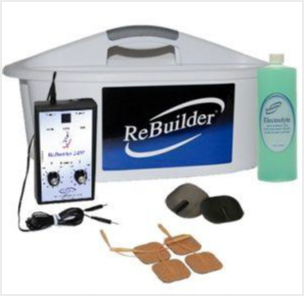
Imagine if you will, that the ReBuilder acts as an ECG (electrocardiogram) to measure the heart’s function and the ReBuilder also acts as a heart pacemaker to correct dysfunction. The difference is the ReBuilder corrects dysfunction of your nerves, does both of things simultaneously and you control everything in the comfort of your own home.
What does this mean for you? It means that you are getting the very latest technology possible to restore your full mobility and relief from your symptoms. Rather than simply numbing your nerves like drugs or other TENS-like devices (essentially ineffective and potentially dangerous “toys” you can buy at Amazon or any drug store without a prescription), the ReBuilder is a full strength prescription device. The ReBuilder is able to calm down your overactive nerves and wake up your under active nerves. Additionally, the ReBuilder’s healing signals include electronic muscle stimulation which automatically strengthens nearby calf muscles (or arm muscles when used for hand pain), and increases local blood flow to enhance healing, support circulation, nerve activity, and muscle activity.
Each 30 minute treatment is the equivalent in exercise to your legs as a 30 minute brisk walk. Because you are sitting in your easy chair at home you get the benefits of the exercise and blood flow without moving your ankles, knees, and hips, this may prove to be an important feature for those neuropathy patients suffering from joint problems.
At Minnesota Family Chiropractic, we believe healing is about more than symptom relief. Our mission is to help people physically, mentally, emotionally, and spiritually pursue the abundant life God designed them to live.
While no treatment can guarantee specific outcomes, we are passionate about helping patients create healthier environments for healing, recovery, and long-term wellness.


